Warren May Hourdrop Question
Instruments- discuss specific features, luthiers, instrument problems & questions
Ok thanks Ken, I'll give him a call in the morning. I have the dulcimer # so he can easily check.
I'd say those are good specs. You can always just try to call Warren and ask. His shop downtown is closed but he still makes a few at home. He's listed in the Berea phonebook I believe.
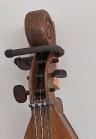
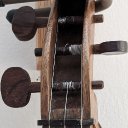
Hi, I'm new to dulcimers but have done a little research and it appears that the wide Hummingbird Hourdrop models may all have hollow fretboards and 26 1/2" scale. But no specs are listed on Mr May's site. Is it safe to assume it will have those specs ?
The one I'm considering is a 2006 in like new condition with a case. It's cherry as well.
Tia
Sounds like a good, inexpensive alternative.
A strap is what I use. Sure there is a tiny bit of getting used to it and 'fitting' the proper length, but it's soooo much easier than hauling around folding tables or footstools. I use loops and big buttons to make the strap adjustable depending on if I'm wearing heavy or light clothes.
I agree. An adjustable strap is pretty easy to get used to. I've even found as I have progressed, I've changed the positioning of the dulcimer by adjusting the strap (and my legs). So, the flexibility is an advantage. Experimenting with a strap is a cheap investment and might be a pleasant surprise for her.
Definitely going to look into that. Thanks
Thanks everyone! So far I am really thrilled with the new instrument, such clear, beautiful sounds. I am going to enjoy getting to know it better😀
A strap is what I use. Sure there is a tiny bit of getting used to it and 'fitting' the proper length, but it's soooo much easier than hauling around folding tables or footstools. I use loops and big buttons to make the strap adjustable depending on if I'm wearing heavy or light clothes.
Your Ron Gibson is a beauty-- have fun with it! Happy strumming!
Congrats on your new baby! The two Ron Gibson dulcimers that I've played were both really fine instruments.
And Mike Casey's book is probably the most comprehensive dulcimer technique manual around.
Enjoy!
Congratulations, very nice looking dulcimer. Hope it brings you years of music joy!
Congratulations on your new dulcimer. I am sure you will enjoy it and have fun playing it.
Ken
"The dulcimer sings a sweet song."
Too funny, last week I didn't own a dulcimer and now I have two!
Last week I built a Hughes dulcimer kit, I posted about that on the Makers group.
Today a Ron Gibson cherry hourglass dulcimer came to live with me and it is just gorgeous. I actually did an unboxing, or more like an uncasing video on You-Tube. Here is the link:
Check out this beauty! I have been practicing right and left hand scales as in Mike Casey's "Hands-On Dulcimers" which came today as well. I also found the tabs online for Ode to Joy , which I really like playing on my ukulele so was glad to track that down. It's gonna be a fun, musical summer in my home!
Jost,
Thank you very much for this. I have several books, older and newer, and I haven't found one that covers it all. I've been customizing the lessons each week, taking a little here, a little there, etc. I will definitely look into this book!
So far, we've only had maybe 6 lessons and are using the DAA tuning, but I'm thinking it's time to go to DAD as well.
thanks again
ms
@melvoid I just noticed that you play bluegrass banjo and released a method for it. So I have another book recommendation: Mark Nelsons Favorite Old-Time American Songs for Dulcimer https://www.melbay.com/Products/97189EB/favorite-oldtime-american-songs-for-dulcimer.aspx
It features what the title promises and features around 100 tabs of old time folk songs. Probably you will recognice most of the them, since some of them are featured in your method too. What I like about this book that it contains tabs for the classic noter/drone playing but also for the modern chord style. So it's quite nice for beginner students which might need some time and experimenting to decide which playing style they prefer. Even better: It features several tunings and explaining them and their use for different keys, even for chord style. This might not sound like a big deal but most chord players and instruction books stick to DAD tuning. Which is just fine (everybody should do what suits them best) but I appreciate that Mr Nelson give his readers more options.
There is just one bad thing to say: He also has a kind of little story to every song. In most cases though I think that they are just goofy or too far fetched to be enjoyable. On the other hand I'm German so it might just be my humorlessness genes ;) Otherwise it's a great book and the storys are easy to ignore.
Regards, jost
Dusty,
Thanks for the thoughts. We did discuss a strap. I've not tried that myself 'cuz my lap works fine without, but I think it might be worth looking into.
Thanks again.
It's a great question, @melvoid, as you can see from the thoughtful responses. I only moved it because the "Site Questions" Forum is for questions about how to use this site, and this discussion will be more easily found in the future if we group it with questions about dulcimers.
When I first started playing the dulcimer I only played on my office chair since I could vary the height considerably, lowering it enough to get a nice flat lap. I also used to lower the arms to kind of lock the dulcimer in place. But I realized that I needed a solution that would enable me to play elsewhere, so I put strap buttons on and immediately found I had more control over the dulcimer and did not rely on a flat lap as much.
I use a foldable waiter's tray table. They come in various heights, available on line or at a local restaurant supply house for about the same $25.
Some folks use a 3 sided "granny walker".
I have short lower legs (28 inch inseam), although I'm about 5' 6" in overall height. Chairs from the 1930-1950 period fit me fine, bur chairs have grown about 2" since about 1960.
I use a block of foam (firm urethane?) which is about 2" thick and about 10 by 12 inches on top as a foot rest. It is half of a piece of shipping foam from a computer or something. I ran a piece of paracord through a hole across one end. It's light, doesn't shed or need cleaning, and the cord makes it easy to carry.
The foot block sure beats carrying an old wooden folding chair.
No problem with the move.
I just thought "How do I get this dulcimer to stay level?" seemed like a good quesion :-)
A cheap suggestion would be an ironing board. They can be adjusted to any height.
By the way, I moved this discussion to the "General Mountain Dulcimer" category since the "How Do I" Forum is specific to questions about how this site functions.
I just thought if the tv tray worked it could also be turned into a table/music stand by adding the top [if needed] and a slanted vertical music /tablet holder.
I have a foot stool that I use to level my dulcimer. I ordered it through this website: https://www.dulcimerbaglady.com/footstool.htm. It works great when a chair is too tall for me.
Might be worth looking into. It just occurred to me that maybe some sort of foot stand/block might work. Like a classical guitarist uses, but for both feet? Or a lower chair?
I'm so confused.
Thanks for the reply!
A tv tray may work. There are some with L shaped legs that are height adjustable. A short board would add extra length if needed.
Hi,
I have a student who isn't terribly tall. When sitting on a chair, her legs aren't level so she has trouble holding the dulcimer on her lap. She has better luck at her dining room table, but it's a bit high. Does anyone know of an adjustable/portable table that would hold a dulcimer? Wide enough so it doesn't jump when fretting or pressing on one end.
I've suggested a strap, so she might try that, but she really likes a table we have at the store where I teach and seems to play pretty well with that setup (although it's not wide enough).
We thought about something custom, but that might be a bit pricey...
Any thoughts?
Thanks
ms
Yes, but strictly Bluegrass on that instrument. In fact, I just wrote a methods book.
Are we allowed to self-promote? If so, https://www.halleonard.com/product/354325/do-it-yourself-banjo
wally-venable makes a good point with using a tuner to check the freet placing/set up.
So: If you can check in the store or order online with return policy this should be enough to check the basic playability of the instrument. This is btw a good idea to do in any case, even if the instrument is more expensive or from a renowed builder. You never know how it was stored before ;)
I remembered that this site had a warning against some cheap brands thus I used the search function.
So for another point of view concerning Apple Creek and two other low level brands:
https://fotmd.com/strumelia/group_discuss/2332/beware-of-internet-ad-sites-of-the-best-dulcimers-to-buy
Of course wally-venables argument for trying Apple Creek with a tuning app/device holds true for these too.
Regards, Jost.
You're welcome Ken. Thanks to the Disney Law, the copyright is in effect for 78 years following the death of the holder and I think the heirs may be able to renew it. I'm not certain about that as it has been quite some time since I read the statute.
Ken
"The dulcimer sings a sweet song."
Thanks Ken. I wondered about that when I started looking for Larry this morning and discovered it is copyrighted by Ralph Stanley. Although Ralph died in 2016, the copyright should still be held by his estate.
Larry, check out this discussion. It may be why you can't find a dulcimer tab. https://fotmd.com/strumelia/group_discuss/2101/clinch-mountain-backstep-copyrighted
Ken
"The dulcimer sings a sweet song."
Visiting nursing homes is challenging at any time, and even more so during a pandemic.
Most nursing homes now have strict rules to protect residents from COVID-19 exposure, such as virtual, window, or driveway visits. Some nursing homes allow socially distant outdoor or indoor visits. My father has dementia and is in a nursing home during the pandemic! For his sake, I started researching ways to help seniors with dementia https://www.thekey.com/learning-center/alzheimers-and-dementia-caregiving/how-to-have-more-good-days-with-dementia. They have eased his and my heartache! Hopefully, the pandemic will be over soon, and I can visit my dad in person!
Hi, Does anyone have Tabs for Clinch Mountain Backstep they can share?
That's what I use, cell app. I made the recommendation as a starting point. At this time in his journey, if it's screwed up, send it back. I also suspect the op doesn't have a good ear' right now.
>>> get an electronic tuner.
I agree, although many now like to use a cell phone APP.
>>> Use the tuner to verify that the frets are properly placed.
Yes, if the tuner shows every not is "in the green" you don't have problems with fret placement. Using your method, if the strings are high, a tuner will "tell you" that the frets are misplaced.
If you have a good ear, simply playing the octave fret will tell you a whole lot about intonation. The error may be either bad fretting or string height.
And we have not touched on "buzzing" which may also require correction.
@Tull66, Different strokes for different folks.
My first experience in my dulcimer world was to build a kit. No musical or wood working background or mentoring at all. It turned out good, I still have it. I went on to build some from scratch and to buy some, although none were [are] foreign made. Be aware there are poorly made MD's floating around in the US that are wallhangers also, but they are mostly homemade I think. I have a friend who bought a foreign made MD, It sounded ok to me, but he is very experienced and has made some stringed instruments. Actually, I've really never heard a bad sounding MD in 20+ years, cardboard or home built, lucky I suppose. If you decide to get an inexpensive or questionable sourced MD, be sure of the return policy and get an electronic tuner. Use the tuner to verify that the frets are properly placed. Folks here will help with that. A used name brand is an option also.
Bottom line, you started at the right place, here. You're getting getting input from several different viewpoints, from folks with different backgrounds and experience, all of which have merit.
I would absolutely tell anyone with no dulcimer experience or first hand technical advisor NOT to buy a dulcimer kit from anyone.
If you don't really know what you are doing, shop in a face-to-face setting where you can try out the instrument and discuss it with the seller. Preferably the seller should demonstrate the instrument.
I suspect that the "unplayable" Applecreek dulcimers primarily need a proper setup. It is common in the music world for factory made instruments to be shipped with the expectation that the selling dealer will do a setup to meet the customer's needs. This is primarily adjusting string height, but also may involve other details. In the ukulele world, string heights are typically too high because lowering them is easy, but raising them isn't. This is probably true for most low priced fretted instruments. If you buy such an instrument, the retail dealer, not the manufacturer or wholesale distributor, is responsible for assuring that the instrument is ready for use.
Wooden instruments can, or will, change between the time they are built and the time the first owner begins to play them. Woods bend, and exposure to string tension can also alter them. No builder can predict the changes.
Generally speaking, if you are ordering an instrument costing $500 or so directly from a well established builder, it will probably be checked and setup before shipping. This is partly because the builder's reputation is at stake and partly because the builder is doing retail business.
For those with a good musical ear, I suspect that if the heights are just a bit high a dulcimer set up with (common) 0.012 strings and which plays "OK" in DAA tuning might be irritating if tuned to DAD, but OK in DAD if restrung with 0.010 melody strings. Correcting that sort of thing is "setup." My opinion on that is based on 70+ years of playing string instruments, training in physics, and amateur building of a variety of fretted instruments. It's not "Rocket Science," but it is precision technology.
I have seen dulcimers from semi-pro builders which were NOT properly set up. Knowing wood working isn't the same are knowing lutherie.
With regard to natural wood versus cardboard versus laminated construction, you should not generalize. All need setup, whether by the builder, retailer, or buyer.
Our local dulcimer group instructor bought a batch of cardboard dulcimers for loan to students. They have served us well for a decade or so, but this is because her guitar player husband spent hours doing the setup, as well as some assembly. She also purchased a group of Applecreek instruments, but again they got an adequate checkout.
... Or to be lent to a complete stranger with no experience who wants to explore playing music.
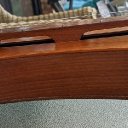
I have two lovely Jack Lyle dulcimers and one has a slit longer than the one in yours and the other has none. It is most likely an additional sound hole, perhaps is presence and/or size has to do with the woods used and whether or not it needed more volume?